
How to Create a Successful Digital Marketing Strategy
Introduction
In the digital world that we live in, having an online presence is vital. Your customers go to search engines, social media platforms, websites and other online tools and resources to search for things, to make comparisons, to read reviews and to choose where they’re going to buy from. Having an online presence isn’t enough anymore, you need a digital marketing strategy.
Digital marketing strategy is a way to find a goal for your business to easily promote it online. You can combine multiple online marketing techniques to help achieve your goal with 100% effectiveness. Seo, SMM, content marketing, google ads, email marketing, and website optimization are some of the most common techniques.
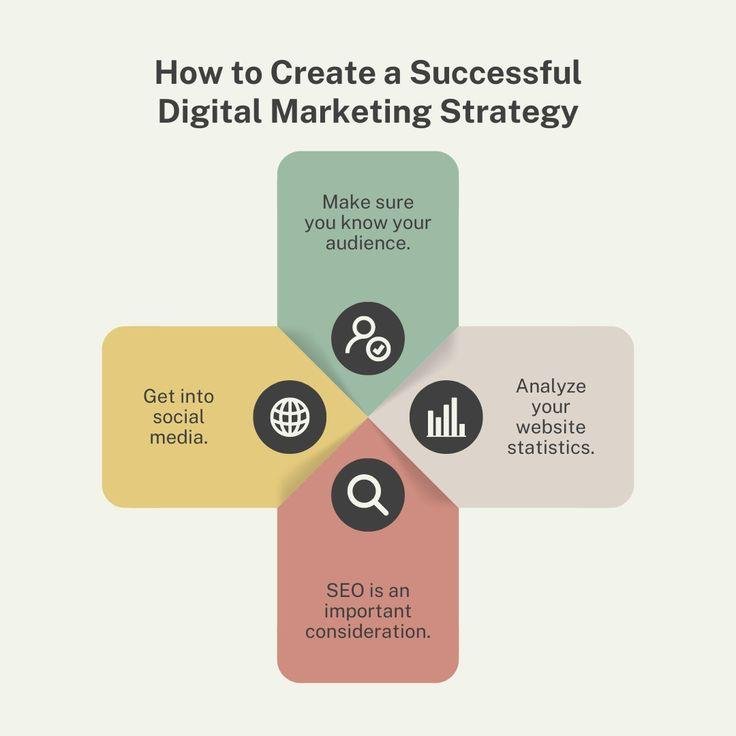
A good strategy won’t happen in a day. You need to plan it well, do research on your audience, create and promote quality content, keep track of how it is performing, and make consistent updates. No matter the size of your business – big or small – these steps can help you develop your digital marketing strategy.
1. Establish Specific And Achievable Goals
What to set goals for your digital marketing strategy. The initial phase to develop an effective marketing strategy is defining the goal you want to accomplish. Most of the times, the digital marketing ROI becomes a challenge because there is no specific goal to compare with, which leads to inefficiency.
Your goals should be measurable and specific. For example, your goals can be:
Increase website traffic
Generate more leads
Boost online sales
Enhance Brand Awareness
Increase followers on social media
Enhance Customer Engagement
Reach a new target audience
Enhance customer retention
Set clear goals to guide your choice of strategies and to track your success in achieving them.
2. Identify and Understand Your Target Audience
One of the most crucial aspects of digital marketing is to find out about your target markets. You should know who potential customers are and what they want.
Research factors such as:
Age and location
Preferences and Interests
Occupation and lifestyle
Online behavior
Purchasing habits
Problems and needs
Preferred digital platforms
In this case, a company that’s targeting a younger audience might spend more of its time on Instagram and short video form content, while a B2B company might prefer to work on search marketing and LinkedIn.
The more you know about your audience, the easier it will be to tailor your content and campaigns to appeal to them.
3. Investigate Your Competitors
It is helpful to get a better understanding of the current market of your industry. Look at the way competitors showcase their brands online and what kind of marketing techniques they are using.
Examine the following:
Websites
Social media profiles
Blog content
SEO keywords
Online advertisements
Offers and promotions
Customer engagement
Competitor research isn’t about mimicking your competitors, it’s about learning from them, understanding what they’re getting right, filling in gaps they may have overlooked and ways to stand out from the crowd.
4. Select Appropriate Digital Marketing Channels
There are a variety of digital marketing channels you could use, but there’s no need to have a presence on every platform. Select channels that are best suited to your needs.
Some popular channels are:
SEO
Search Engine Optimization (SEO) boosts the appearance of your website in search engines results. Your business can be found by the right buyers and prospects by using the optimized keywords and search engine content.
Social Media Marketing
They provide an effective way for companies to get messages across to the targeted audience. Consistent posts, videos, stories, campaigns, and interactions with the audience will go a long way to bring awareness and engagement.
Content Marketing
Content marketing is the process of providing your audience with compelling, useful content. Blogs, videos, guides, infographics and educational posts, to name a few options, can help you draw visitors and gain trust.
Paid Advertising
Advertise on Google Ads and social media Social media advertising and advertising platforms like Google Ads allows companies to target specific audiences. Paid campaigns can be used to boost traffic, leads and sales and brand awareness.
Email Marketing
Email marketing allows you to keep in contact with current and potential customers. Customer relationships can be built using news, promotional, product update emails and personalised campaigns.
5. Develop Excellent, Useful Content
The greatest part of a good digital marketing plan is content. Do not produce content solely to advertise your product, but instead to add value to a customer’s life by solving a problem.
Some effective content formats include:
Blog articles
Social media posts
Videos
Reels and short video clips
Infographics
Case studies
Customer testimonials
Email newsletters
Product guides
Quality content helps to make you stand out, attract new customers, prove your expertise and establish trust.
6. Enhance Your Business Website
Your website is generally the first impression that a prospect has of your business, and so is something you want to ensure that your website is designed to provide a polished, engaging experience for your visitors.
Ensure your site has:
Mobile-friendly design
Fast loading speed
Simple navigation
Clear service or product information
Strong calls-to-action
Easy contact options
SEO-friendly content
Well-designed landing pages
An optimized website attracts your visitors to help find what they are looking for and then motivate them to take the next step which would be contacting your business or making a purchase.
7. Leverage Analytics to Assess Effectiveness
Digital marketing enables you to measure your results and track your progress. Data has become an integral part of any marketing strategy.
Monitor metrics such as:
Website visitors
Search rankings
Engagement with social media
Ad clicks
Leads generated
Conversion rate
Cost for each lead
Sales and revenue
By interpreting these findings you can get an idea of which measures are being successfully adopted and which are not.
8. Set and Manage Your Marketing Budget
Budgeting helps you plan your finances too, since digital marketing is gonna need its fair share of investment. Plan out on how much you’re willing to allocate towards search engine optimization, content, social media, paid ads, email marketing and whatnot.
Getting started doesn’t always require a large budget. With a sensible budget and targeted campaigns, as well as ongoing optimization, you can make good use of your time and money.
Keep checking your spend and performance regularly, so that you can optimise your campaigns.
9. Test, Improve, and Stay Consistent
Digital marketing is always changing. From new platforms to new customer trends, new technologies, and new behaviors, the ways people engage with brands is always shifting.
Thus, business should regularly test and refine their strategy. You can try the following:
Various ad types
Headlines and captions
Images and videos
Keywords
Content topics
Calls-to-action
Target audiences
Be consistent too! There’s only so much content you can put out, but make sure you’re consistently publishing useful content to remain in your customers’ minds.
Conclusion
Developing a digital marketing strategy takes planning, research, creation, and continuous improvement. Companies should begin with establishing objectives and knowing their audience. They can then identify the digital marketing channels to use, the content to develop, optimize their website, their budget, and measure campaign results.
You might find that each of these techniques can support your digital presence in different ways: SEO, social media marketing, content marketing, paid ads, email marketing, and even analytics. The exact answer, though, will vary from business to business.
Digital marketing is not a sprint but a marathon. It’s a continuous process where a business should learn from the result of every step, adapt accordingly and improve every step of the way by tracking results. Digital Marketing, if strategized and executed properly can help build your brand’s online reputation, reach the right audience and grow!